
training · career
Becoming a solar technician in Senegal: path, certified training, 2026 salaries
Senegal's solar energy market is hiring. Which training, which skills, what salaries to expect, and how to land a stable job.
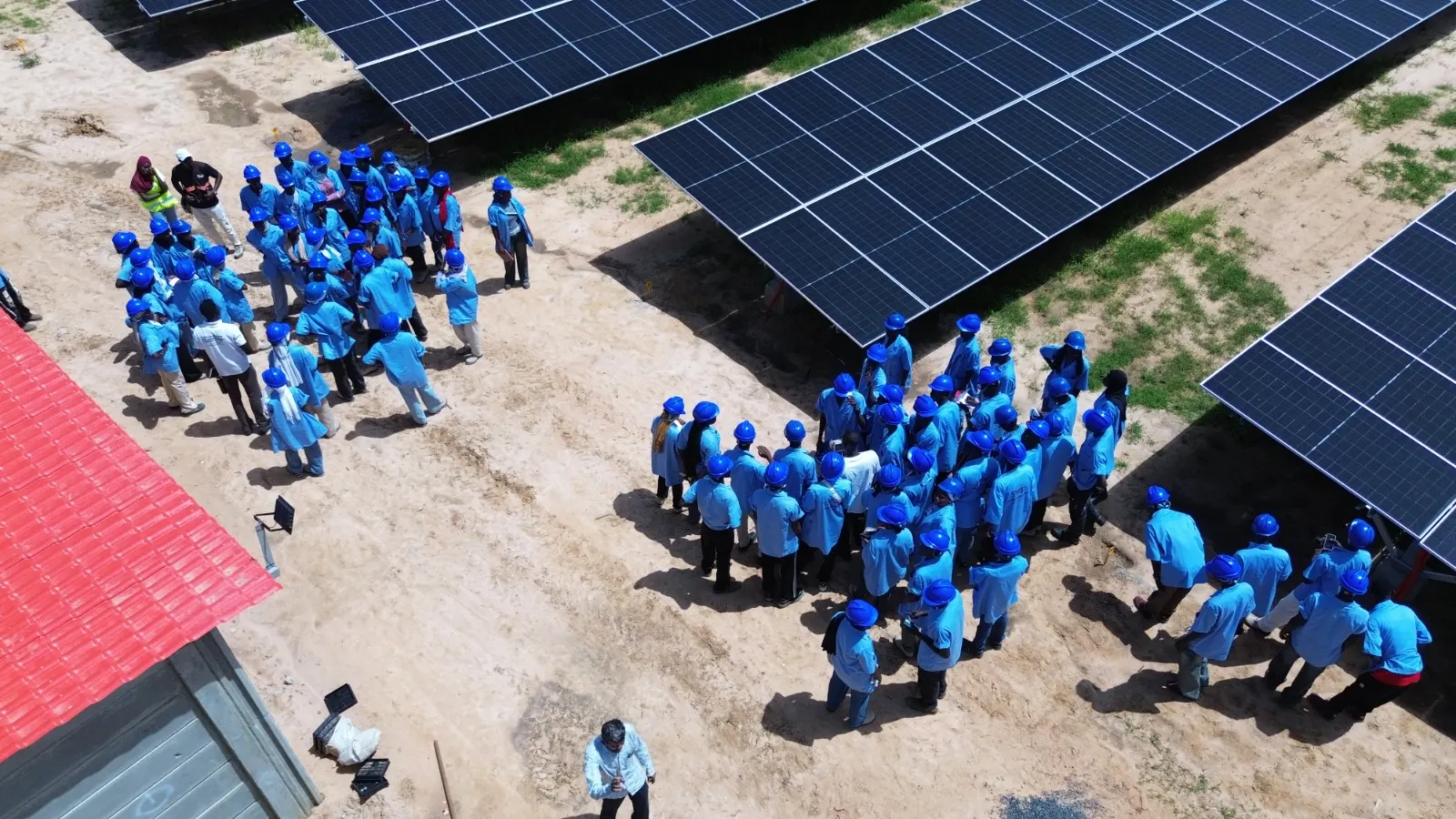
A booming career in Senegal
The Senegalese solar market has doubled every 3-4 years since 2019. Industrial PV plants, agricultural boreholes, home kits, agri-food cold rooms: demand is exploding, but skilled labour is severely short. Many projects are still built by self-taught technicians, which explains the repeated breakdowns and underperformance seen in the field. For young technicians and career-switchers, this is a direct opportunity: a growing, uncrowded market and decent pay.
What profiles are in demand?
Two profiles dominate demand: the versatile technician (installation, cabling, commissioning, troubleshooting), and the engineer or senior technician handling sizing, supervision and audits. Between the two, the site foreman (3-5 years of experience) is especially sought — the person who turns an average site into an excellent one. Women are still rare in the trade: teams that hire them (like DSG) find both operational and commercial upside.
Must-have technical skills
- Electricity fundamentals (Ohm's law, power, grounding)
- Reading electrical schematics and installation plans
- DC and AC cabling, torque, protections
- Sizing a solar field from consumption and irradiation
- Battery selection (lithium vs lead, usable capacity, depth of discharge)
- Configuring a hybrid inverter (Deye, Huawei, Sungrow, Victron)
- Clamp meter and multimeter measurements
- Fault diagnosis and reading inverter alarms
- Safety: electrical risk, working at heights
Certified training in Senegal
Three main routes. Initial training (BTS/DUT in energy at ISEP Thiès, EPT Thiès, UCAD) — very comprehensive but long (2-3 years) and selective. Professional continuing education: ProSolar Academy (6 months, CCP issued by ISEP Thiès, USD 500, 70 % hands-on), QualiSolaire Sénégal (6 months at CFPT Yoff). These are open without a specific degree and lead to an employer-recognised certificate. On-the-job training, through apprenticeships or internships: useful as a complement, insufficient on its own.
2026 salaries and prospects
Ranges observed in Senegal (excluding bonuses and overtime):
- Junior technician (0-2 yr): USD 250-420/month
- Experienced technician (2-5 yr): USD 420-670/month
- Site foreman: USD 670-1,000/month
- Design engineer or project manager: USD 1,000-2,500/month
- Installer entrepreneur (reconversion, post-training): variable income, often above salaried work from year 2
What about solar entrepreneurship?
The other route, and it is booming. Many former technicians start their own installation business, often beginning with their home village. Demand is there, clients prefer local installers, margins are decent. ProSolar Academy explicitly includes an Incubation and entrepreneurship module to prepare for this route: business model, commercial offer, project management, client relationship.
How to enter the trade now
Three concrete steps: (1) Choose a serious training — certified, with substantial hands-on practice on real equipment. ProSolar Academy is 70 % practical, with real panels, hybrid inverters, lithium batteries, solar pumps. (2) Nail the internship — 3 months minimum, ideally across several site types (residential, industrial, pumping). (3) Build your portfolio — photos of your installations, signed commissioning reports, client testimonials. The next ProSolar Academy cohort starts 11 January 2027 at ISEP Abdoulaye Ly, Thiès. Enroll online.
Frequently asked questions
- Which training to become a solar installer in Senegal?
- Recognised certified trainings include ProSolar Academy (6 months, CCP issued by ISEP Thiès, 70 % hands-on, USD 500), QualiSolaire Sénégal (6 months at CFPT Yoff), and the energy BTS of ISEP Thiès and EPT. For rapid entry into the trade, 6-month continuing programmes are the best compromise.
- How much does a solar technician earn in Senegal?
- A junior starts at USD 250-420/month. After 2-5 years, experienced techs earn USD 420-670. A foreman reaches USD 670-1,000. Design engineers and project managers often exceed USD 1,500/month.
- Do you need a degree to become a solar installer?
- No, continuing programmes like ProSolar Academy are open without academic prerequisites. A secondary school level or strong motivation is enough. Initial technical programmes (BTS, DUT) are longer but open doors to engineer or project manager roles.
- When does the next ProSolar Academy cohort start?
- The next ProSolar Academy cohort starts 11 January 2027 at ISEP Abdoulaye Ly in Thiès. 20 seats maximum. Online enrollment on dsg.sn/en/prosolar-inscription.html, enrollment fee ~USD 170 via Wave, course cost ~USD 500.
Need a free study?
Let's talk about your project.
Free study within 72 hours, detailed line-by-line quote, on-site visit by our teams.